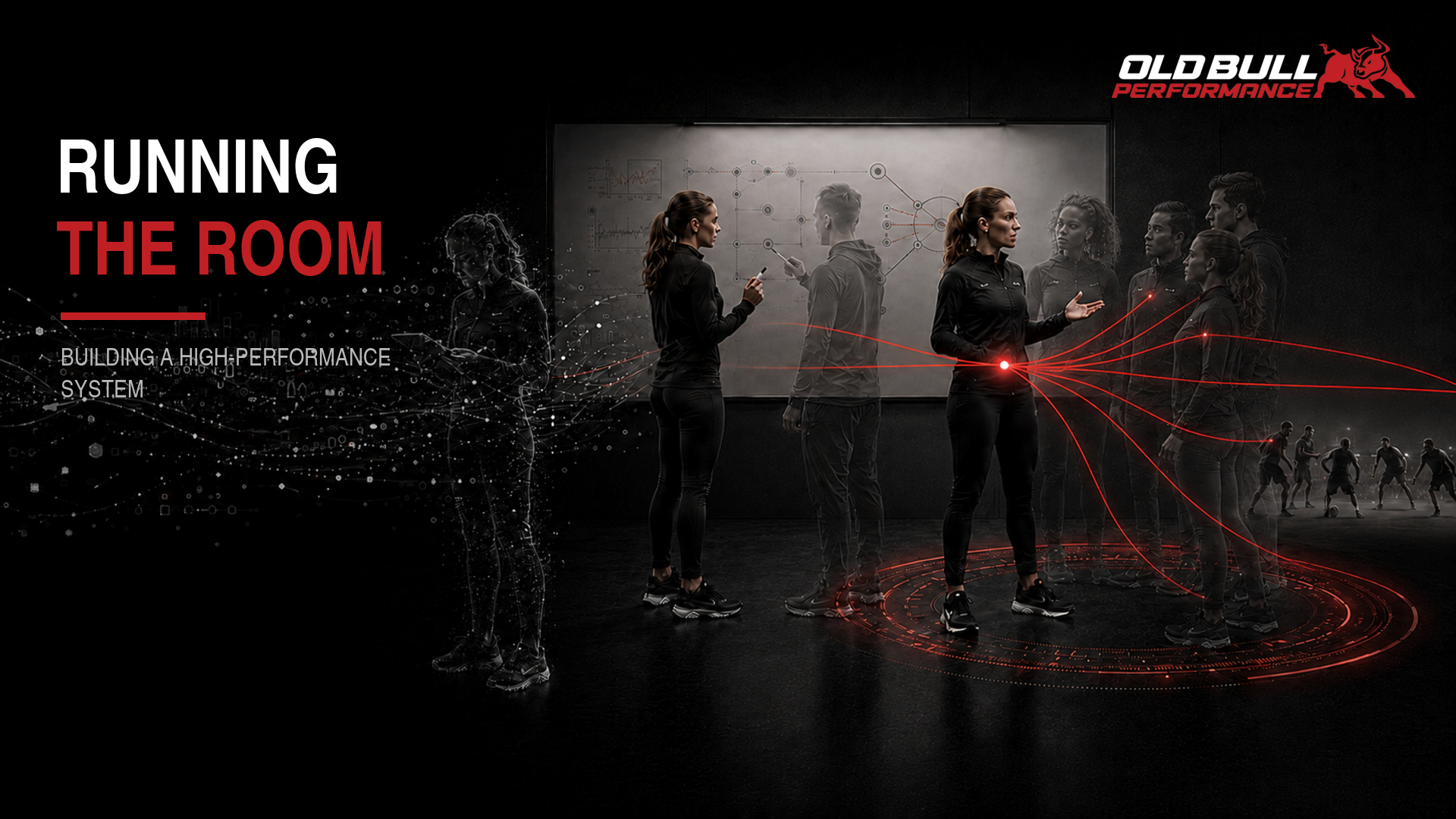
BEING THE BEST IN THE ROOM AND RUNNING THE ROOM ARE TWO DIFFERENT JOBS.
A structured pathway from good practitioner to department lead, to high-performance manager.
Built by someone who made the climb, not someone who studies it.
Becoming an HPM
You became the best practitioner in the building. Nobody taught you what comes next.
You were good at the work. Good enough that people noticed. Good enough that someone eventually said the words “we want you to lead this,” or good enough that you have started to wonder why you are still doing the work while someone less capable runs the room.
Then the ground shifts. The skills that made you the best practitioner in the building are not the skills that run a department. Suddenly it is staff who will not shift, meetings that decide nothing, a coach who wants an answer you cannot defend, and a medical team you are somehow supposed to align with but were never taught how. You are good at your job. You were never taught this one.
And here is the part nobody says out loud
Being the best practitioner in the room and being the person who runs the room are two different jobs. Nobody hands you the second one.
The gap
Nobody maps the actual climb.
Look for where to learn it, and you find a strange hole.
- Universities sell you a qualification.
- Certifications sell you permission to do the work you already do.
- Leadership seminars sell you a weekend of inspiration, a certificate, and a feeling that fades by Tuesday.
All of them assume you are already in the chair, or that reading about “leadership legacy” will somehow teach you to build a decision pathway.
Nobody teaches the practitioner how to become the department lead, or the department lead how to become the HPM, as a structured pathway with the real tools at each stage. It is the most common career progression in high performance sport, and it is the least taught.
That gap is what OBP exists to fill.
The pathway
Three stages. One climb.
-
1
Stage one
Practitioner
You are good at the work and you are not yet running it. Reading the room, leading up before you have the title, working out what the job actually asks of you.
-
2
Stage two You start here
Department Lead
The core. Audit your people and your technology. Build a shared language so staff stop arguing about exercises. Turn data into decisions you can defend. Run meetings that actually decide. This is Building a Performance Operating System, and it is where most practitioners are drowning right now.
-
3
Stage three
High Performance Manager
Department values, the Grey Zone between medical and performance, succession, and holding a standard when the pressure arrives. Running the whole operation, not one department inside it.
The work begins at stage two, because that is where it is hardest and where the tools matter most.
What you actually get
An operating system, not a certificate.
Not a certificate.
Not a networking cocktail hour.
Not another course about your leadership journey.
You get an operating system. Every module leaves you with something you use in the building the week you finish it.
What you walk away holding
- A staff capability map. Where each person actually sits, and how to lead from that reality rather than from hope.
- A tech stack you can trust. A written record of what each system truly measures, and what you have only been inferring.
- A decision-gate framework. Go, Modify, Stop, with the owners and the criteria set in advance rather than argued in the moment.
- A meeting architecture. Agendas, typology and a clean audit trail, so nothing is lost and nothing is decided twice.
- A department decision pathway. From data capture to action, with the failure points named before they cost you.
What you will not find here
- No certificate as the product
- No networking for the sake of networking
- No module on your leadership journey
- Nothing you cannot use on Monday
Built from thirty years at the elite end of sport, and priced so you can buy it yourself without asking anyone for a budget.
Start the pathway →Who is teaching this
He made this climb.

Dr Jason Weber
Founder, OldBull Performance
High Performance Manager at Fremantle Football Club for twelve seasons, through a rebuild from the bottom of the table to Grand Finalists. Two Brownlow medallists coached one on one, from early career to the top of the game. Seven seasons before that with the Wallabies, including a run to the 2003 World Cup final.
He is not a consultant who advises departments. He ran two, and wore the outcomes.
And the part that cannot be argued with
The department he built in the AFL and beyond produced three full-time High-Performance Managers across two different sports, and a fourth now running an elite academy program.
Every leadership course will tell you it develops people.
Almost none can show you what their people became.
And he has not stopped
Still in the room.
Since the AFL Jason has been brought into performance departments to deliver this exact material.
What they called him about
- One club could not get performance and medical pulling the same way.
- One was drowning in technology it had been sold and could not interpret.
- One had lost the thread on getting injured players back onto the field.
Those are three of the four modules in this course.
He did not build it and then go looking for a market. The same problems kept arriving, and this is what he has been doing about them.
On the technology
He is not commenting from the sidelines. He has spent the last decade building performance analytics software and writing the code underneath it, which is why Module 2 is about what your systems can actually tell you rather than which brand to buy.
Not ready to buy anything
Take three pieces of it free.
Not summaries, not a preview. Three of the actual pieces, out of the first two modules.
- A podcast on why more data becomes more noise, and what discipline has to do with it.
- An audit you run on your own tech stack, to find out what each system actually measures and what you have only been inferring.
- A procedure that separates monitoring from testing, and stops the two being mashed together.
No cost. No card.
You spent years becoming the best practitioner in the building.
Spend a fraction of that becoming the person who runs it.
The climb has a map now.
Start the pathway →