
Do it your way!
Sep 08, 2026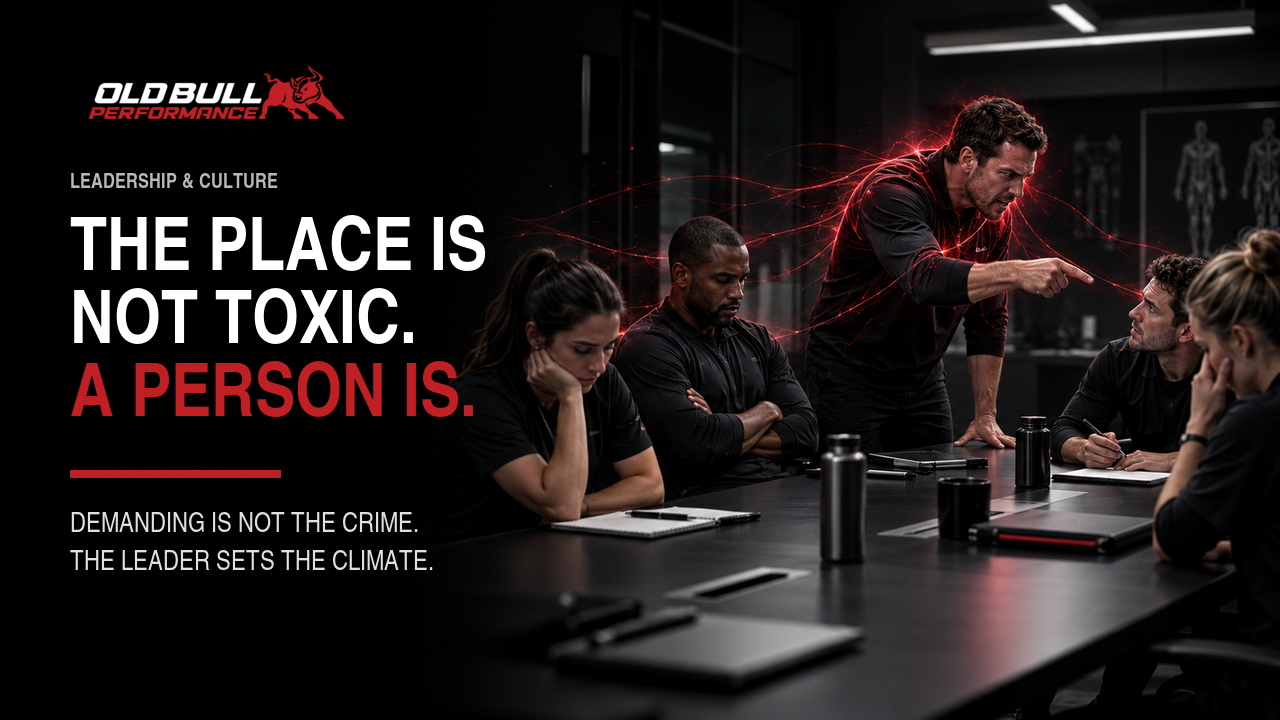
You walk into the department, and the air is already wrong. Someone has clipped you before you even have your team kit on. Someone else is being blamed in front of everyone. Nobody volunteers anything they have not been asked for. You go home and you tell whoever is listening that the place is toxic.
The place is not toxic. A person is.
A young medical professional asked me about this only the other day. She works in an environment that is highly stressful, under a leader who is highly agitated, who leads in a manner that is very, very pointed, blaming people and forcing them into positions they do not want to be in. She had come from an environment where the culture was entirely different. Her question was the right one. Is the environment toxic itself, independent of the leader, or did the leader create it?
I do not have a problem with hard. Demanding is not the crime. Look at Mourinho in football, highly aggressive, very demanding on his players. Did he generate a healthy environment? Or an elite one? That's for the people who were there to comment, but plenty of them WANTED to play for him and gave a lot to achieve that goal. There is no question he created an environment where the players performed at the highest possible level. Whatever else he was, he was not doing an impression of someone else.
In Australia right now we are in AFL finals football, and you can watch it happening live. A side that has been the best team all year loses badly the first time it is genuinely challenged, and what shows up is a different character, a different culture. Ask the honest question. Is that the coach?
Does leadership style contribute to the culture of an environment. Absolutely. Setting a culture, or changing one when you move into a new environment, starts with how you conduct yourself. If you conduct yourself around staff as dismissive, and uncaring about the situations they are in, unquestionably those around you will say those things and tend toward the same way. If you display poor discipline, a lack of attention to detail, poor technical skills, these things are direct communications to your staff, whether you open your mouth or not.
People are not going to change their nature. But if their nature is to be persuaded, to be adaptive to what is around them, then how you act is what they adapt to. You are either allowing the drift, or you are encouraging the change toward something positive.
Do It Your Way
So, for young leaders coming into a sporting environment, you are going to have to find the balance.
How tough are you going to be?
How technically demanding are you going to be?
How open to dealing with the small details will you be?
I don't think there is a correct formula to these questions. I think the starting point, before you take a leadership role, is to understand how you operate.
What is your work tempo?
What do you expect of yourself?
How do you operate under pressure?
What are the lines that you will not accept being crossed?
Answering these questions (among many others) will help you define your way.
Be consistent. Be upfront with people about what is expected. Be transparent in your review. And above and beyond all, be true to yourself.
You cannot be a leader that is derived from something made up. It does not last. It has to be derived from you being honest. And the closer you are to yourself, the less stressful it is, and the more sustainable it is.
Check out our Running the Room; Building a High-Performance Operating System Course
3 modules - 3 days free access